← Back
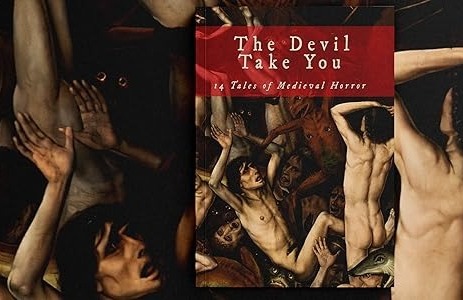
"The Devil Take You" - 14 Tales of Medieval Horror
There’s not a whole lot of well-written Medieval horror out there, and so I was impressed to discover this collection from the indie press Sentinel Creatives, entitled "The Devil Take You: 14 Tales of Medieval Horror." These stories were, by and large, deftly written. Many of the author names were new to me, which was a pleasant discovery. (I’ve come to find that “big name” anthologies often settle for mediocre stories, because the marquee matters more than the material. So let's celebrate books that push forward new voices.)
The breadth of these stories carefully covers the expanse of the Medieval landscape, from London to the Carpathian Steppes. It’s nice to see a balance of Eastern and Western perspectives—although I will readily admit that the Mongolian and Arabic stories required a little more “buy in” and careful reading, as they were rife with unfamiliar terminology. Most of the stories shared a common theme of the supernatural, with different cultural depictions of devilry. I think the editors did a great job of filtering out redundancy and selecting pieces that offer unique perspectives.
Some of the highlights for me:
- Amanda M. Blake’s opening story, “The Plank in Thine Own,” depicts the mortification (read: torture) of a demon captured by a monk. The sado-masochism is readily apparent in this tale of spiraling madness, where it’s increasingly difficult to tell apart man and monster.
- C.L. Werner’s “The Hungry Sand” blends Arabic and Mongolian culture in a dance with the devil in the desert.
- Brian Crenshaw’s “Hag’s Haggle” is a classic Faustian bargain with a fairytale feeling and an enjoyable twist.
- Justin Fillmore’s “The Nightman’s Assistant” highlights the very interesting, and disgusting profession, of Medieval shit cleaners. Even if the plot is a little thin, the situation these characters find themselves in… ugh!
- Stephanie Ellis’s “The Eye of Odin” imagines Viking conquerors tormented by a forbidden church relic, a type of Pandora’s Box, whose inaccessibility drives them to covetous madness.
- Anya Leigh Joseph’s “Rather Unto Moses” follows a monk’s dark obsession with the idea of well-intentioned people lingering to Hell. “To what part of Hell does God consign the Jews?” he asks,as he approaches the end of his life and his own eternal reckoning.
***
0 Comments Add a Comment?